How to Care for Leather Belts: Cleaning, Conditioning and Storage
To care for leather belts, wipe them with a damp cloth, dry them slowly away from heat, condition lightly only when the leather looks dry, and store them hanging or loosely rolled. Customized Leather Belts makes full-grain, top-grain, embossed logo and heavy-duty work belts, and this guide covers how each style should be cleaned, conditioned and stored.
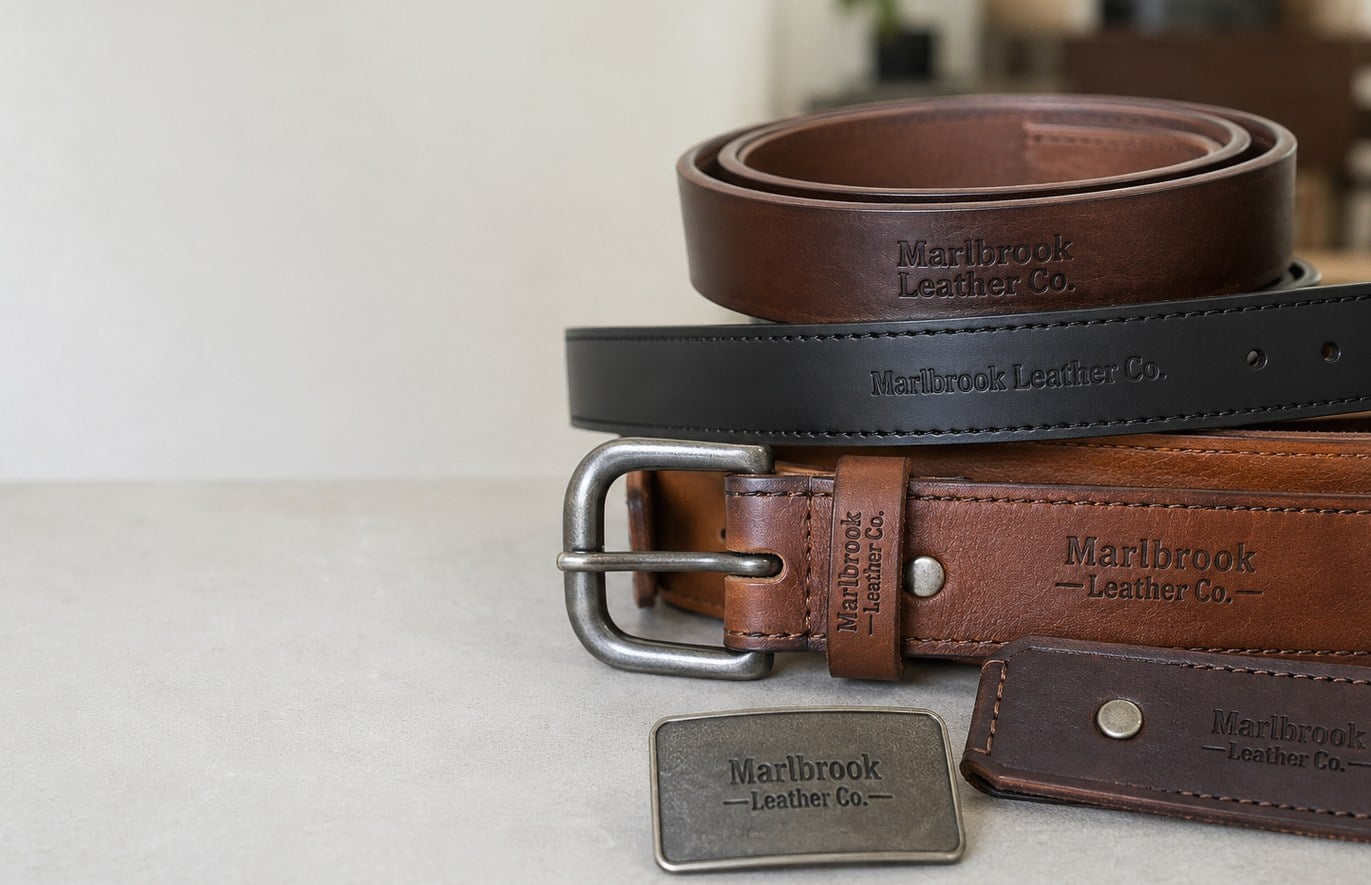
- Clean leather belts with a damp cloth, never household cleaners or the washing machine
- Dry wet belts slowly at room temperature, away from heaters and direct sun
- Condition only when the leather looks dull or dry; test on the inside of the tail first
- Store belts hanging or loosely rolled, never tightly coiled or sealed in plastic
- Vegan and PU alternative belts need a damp wipe, not leather conditioner
How do you care for custom leather belts so they last for years?
Caring for custom leather belts comes down to four habits: keep the strap dry, condition it lightly when it starts to look thirsty, let it rest between wears, and store it flat or hanging instead of tightly coiled. None of these steps needs special tools, and together they protect both the leather and any logo pressed into it.
Leather is a natural material that holds oils and moisture in its fibers. When those oils dry out, the surface can crack along the fold near the buckle and around the holes. When the strap is soaked and dried too fast, it can stiffen or warp. Good care simply keeps the leather in a steady middle zone.
For organizations ordering leather belts in bulk, care matters for a second reason: a belt that looks worn reflects on the brand stamped into it. A short care card or a line in the welcome email often does more to keep a uniform program looking sharp than replacing belts early. The sections below cover each habit, the differences between leather types, and what to tell the people wearing your belts.
How should I clean a leather belt without damaging it?
Clean a leather belt by wiping it with a soft, slightly damp cloth, then letting it air dry at room temperature away from heaters and direct sun. For most dust, sweat and light grime, that is all a strap needs. Harsh soaps, household cleaners, alcohol wipes and the washing machine all strip oils and should be avoided.
- Take the belt off and lay it flat on a clean surface.
- Brush off loose dirt with a dry, soft cloth or a soft brush.
- Wipe the grain side with a cloth that is damp, not wet, working along the length of the strap.
- For stubborn marks, use a small amount of a cleaner made for leather and test it on the inside of the tail first.
- Let the belt dry naturally before you wear it or apply conditioner.
Pay attention to the area around the buckle and the holes, because that is where sweat and friction collect. On embossed logo belts, use the cloth gently over the impression rather than scrubbing into it, so dirt lifts out without flattening the edges of the design. Plate buckles can be wiped separately with a dry cloth.
How often should leather belts be conditioned?
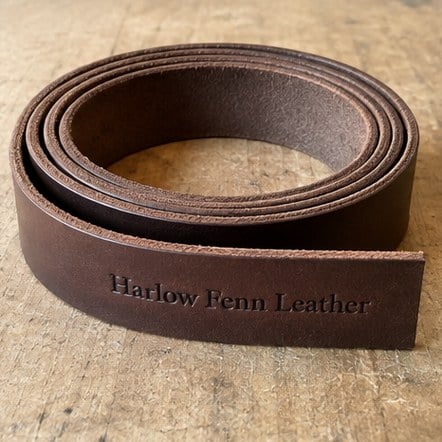
Condition leather belts only when they need it: when the surface looks dull or dry, feels stiff, or shows fine lines near the buckle fold. For a belt worn daily in an office, that might be a few times a year; for heavy-duty work belts exposed to sun, rain and dust, it will be more often. Over-conditioning is a real risk, because too much product can darken the leather and leave it soft and limp.
Apply a thin layer of a conditioner made for leather with a soft cloth, work it in along the strap, wait for it to absorb, then buff off anything left on the surface. Always test on the inside of the tail first, since conditioners can deepen the color, especially on lighter brown leather.
- Full-grain leather absorbs conditioner well and develops a richer patina over time, so light, occasional care keeps it at its best.
- Top-grain leather has a sanded, finished surface that takes up less product; a very light coat is enough.
- Vegan and PU alternative belts are not leather at all and should never be conditioned; a damp wipe is the right care.
When in doubt, do less. A belt can always take another light coat later.
What is the best way to store custom leather belts?
Store custom leather belts hanging full length from the buckle or laid loosely rolled in a drawer, in a cool, dry place with some airflow. Avoid tight coils, plastic bags and damp basements. Leather needs to breathe, and a belt that is wound tightly or sealed in plastic can hold moisture, take on a permanent curl, or develop mildew.
A few storage habits make a noticeable difference:
- Hang belts on a hook or belt hanger so the strap stays straight and the buckle does not press into the leather.
- If drawer space is all you have, roll the belt loosely with the grain side out and leave room around it.
- Keep belts away from radiators, car dashboards and sunny windows, which dry the leather and fade color.
- Rotate between two belts when possible so each one has time to dry out and relax after a long day.
For organizations holding spare leather belts for future hires, store the stock in the original packaging inside a dry, climate-controlled room rather than a warehouse corner or a truck. Check the spares once in a while and air them out so they are ready to hand out looking new.
What should I do if a leather belt gets soaked or stained?
If a leather belt gets soaked, blot off the surface water with a dry towel, then let the belt dry slowly and naturally at room temperature. Never use a hair dryer, a heater or direct sun to speed things up, because fast drying is what makes leather stiff and brittle. Once the strap is fully dry, a light coat of conditioner restores some of the oils the water carried away.
Stains need a calm, step-by-step approach:
| Problem | What to do | What to avoid |
|---|---|---|
| Rain or splash | Blot, air dry slowly, condition lightly | Heat, hair dryers, radiators |
| Sweat marks near the buckle | Damp cloth wipe, dry, then condition | Scrubbing with soap |
| Oil or grease | Blot immediately; leave to wick out; use a leather-safe cleaner if needed | Water, which can spread oil |
| Mud and dust on work belts | Let dry, brush off, then damp wipe | Wiping wet mud into the grain |
Some marks become part of the character of full-grain leather and soften over time. If a belt is badly damaged, ordering replacements with the same approved design is usually simpler than heavy restoration.
Does care differ for work belts, dress belts and embossed logo belts?
Care for each style of leather belt follows the same basic rules, but the emphasis changes with how the belt is used. Heavy-duty work belts need more frequent cleaning and conditioning because they face weather, tools and dirt. Top-grain dress belts mainly need gentle wiping and careful storage to keep a polished surface. Embossed logo belts need a light hand over the impression so the design stays crisp.
- Heavy-duty work belts: brush off dirt at the end of the day, let the belt dry fully if it got wet on the job, and condition when the strap looks pale or dry.
- Top-grain dress belts: wipe with a dry or barely damp cloth, hang to keep the strap straight, and keep away from heat to protect the finish.
- Full-grain leather belts: expect a patina to develop; occasional conditioning supports that aging rather than fighting it.
- Embossed logo belts: avoid heavy waxes that can fill the impression; buff gently and let product absorb.
- Buckle and plate belts: wipe the plate with a dry cloth and keep it from knocking against hard surfaces in storage.
If you are choosing a style partly on how much upkeep your team will realistically do, say so in your quote request. Customized Leather Belts can point you toward the construction that suits the work.
How can an organization help its team take care of company leather belts?
An organization can extend the life of company leather belts by telling wearers how to care for them on day one. A short care note, delivered with the belt or in onboarding materials, sets expectations and reduces early replacements. Most damage comes from simple habits like drying a soaked belt on a heater or leaving it coiled in a hot car.
A practical care note covers just a few points:
- Wipe with a damp cloth; never use household cleaners.
- Dry naturally, away from heat and direct sun.
- Condition lightly when the leather looks dry.
- Hang or loosely roll the belt for storage.
- Ask for a replacement through the program rather than repairing a broken strap at home.
Keeping the approved mockup and order details on file makes replacements easy. When a belt wears out, a reorder of the same design starts from an approved file, with production running about 2 weeks. The minimum order of 12 means a small batch of replacements and new-hire belts can be combined in one run.
To plan a program with care in mind, request a quote from Customized Leather Belts, which returns a free mockup within 24 hours and asks for no payment until you approve the design.
Frequently asked questions
Can saddle soap be used on custom leather belts?
Saddle soap can be used on custom leather belts, but sparingly and only when a damp cloth is not enough. Saddle soap cleans deeply and can pull oils from the strap, so follow it with a light coat of conditioner once the leather is dry. Customized Leather Belts suggests testing on the inside of the tail first, especially on lighter brown or dress belts.
Will conditioner darken a brown leather belt?
Conditioner often darkens a brown leather belt slightly, especially on full-grain leather and lighter tan shades. Many people like the richer tone, but if you want to keep the original color, choose a light conditioner, apply a thin coat, and test on the inside of the tail before treating the whole strap. Several thin coats over time are safer than one heavy coat.
Should a leather belt be conditioned before its first wear?
A new leather belt rarely needs conditioning before its first wear, because the strap leaves the workshop with its finish and oils in good condition. Wear the belt normally and condition it later, once the surface starts to look dry or dull. Customized Leather Belts ships belts ready to wear, so adding product too early mostly risks darkening the leather unnecessarily.
How do I stop a leather belt from cracking near the buckle?
Cracking near the buckle on a leather belt usually comes from repeated folding combined with dry leather. Condition that section lightly when it looks thirsty, avoid storing the belt tightly coiled, and rotate belts so each one rests between wears. A belt sized correctly also flexes less at the fold, which reduces stress on the leather around the buckle and holes.
Can leather belts be stored in a hot car or truck?
Leather belts should not be stored long term in a hot car or truck. Heat dries the natural oils in the strap, which leads to stiffness, fading and cracking, and trapped humidity can encourage mildew. Work crews who change at the job site should keep spare belts in a bag inside the cab rather than on the dashboard, and bring them indoors at night.
Is it safe to put a leather belt in the washing machine?
A leather belt should never go in the washing machine. Soaking and tumbling strip the oils from the leather, can warp the strap, and may damage an embossed logo or a plate buckle. Wipe the belt with a damp cloth instead, then let it dry naturally. Customized Leather Belts recommends the same gentle wipe for vegan and PU alternative belts.
How should vegan alternative belts be cleaned?
Vegan alternative belts are cleaned with a soft cloth dampened with water, followed by air drying. Because PU and other alternative materials are not leather, leather conditioners and oils do not help them and can leave a sticky film. Keep vegan belts away from strong heat, which can affect the coating, and store them flat or hanging just as you would leather belts.
Will cleaning wear away an embossed logo on a leather belt?
Gentle cleaning will not wear away an embossed logo on a leather belt, because the design is pressed into the leather rather than printed on top. Use a soft cloth and light pressure over the impression, and avoid stiff brushes or heavy wax that can fill fine lines. Customized Leather Belts sizes the embossing to the strap so the design stays readable through normal care.
How can I remove a musty smell from stored leather belts?
A musty smell in stored leather belts means they have held moisture. Hang the belts in a dry, well-ventilated room away from direct heat for a few days, then wipe them with a barely damp cloth and condition lightly once dry. Going forward, store leather belts hanging or loosely rolled in breathable conditions rather than in sealed plastic.
Does a leather belt need different care in winter?
A leather belt benefits from a little extra attention in winter, when road salt, snow and indoor heating all dry the strap. Wipe off salt or slush with a damp cloth as soon as possible, let the belt dry at room temperature, and condition lightly when the surface looks pale. Keep belts away from radiators and heating vents during storage.
Can a care card be included with a company leather belt order?
Organizations ordering company leather belts can mention a care card in the quote request. Customized Leather Belts can discuss what fits with the packing for your program, and many teams simply add the care points to an onboarding email. Either way, simple instructions on cleaning, drying and storage help every wearer keep the belt looking as good as the approved mockup.
When should a worn leather belt be replaced instead of restored?
A worn leather belt should be replaced when the strap is cracked through, the holes are torn into each other, or the stitching and buckle attachment have failed. Light scuffs, dullness and minor stains respond well to cleaning and conditioning. For uniform programs, Customized Leather Belts can rerun your approved design, so replacements match the rest of the team.
Get a free mockup for your leather belts
Send your logo or idea and the quantity you have in mind. Customized Leather Belts returns a free mockup within 24 hours, you approve the design before anything is produced, and standard turnaround is about two weeks with faster options available. Get a custom quote.